A Practical Review of the Norweco Singulair Green System
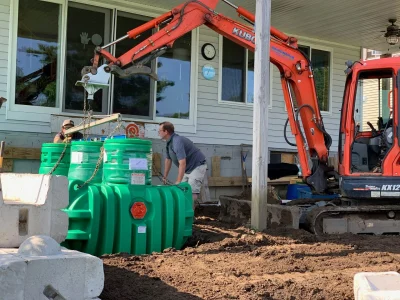
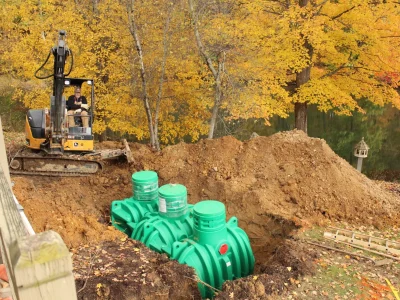
When people shop for onsite wastewater treatment, they often start in the wrong place. They look for a brand first, or a brochure promise, or the cleanest rendering on a dealer website. The better starting point is much less glamorous: soil conditions, lot size, groundwater, local permitting rules, and how much attention the owner will realistically give the system after installation. The Norweco Singulair Green system sits right in the middle of that real-world conversation.
It has a strong reputation in the advanced treatment space, and not by accident. The system is designed to treat household wastewater to a higher standard than a conventional septic tank alone. In settings where a basic gravity septic system is not appropriate, either because of site constraints or regulatory requirements, a unit like the norweco singulair green can make a marginal lot buildable or keep an existing home in compliance. That does not make it a magic box. It still depends on correct sizing, thoughtful installation, and consistent service.
What follows is a practical review, written from the perspective that matters most after the sales pitch fades: how this system tends to perform, what owners and installers should watch, and where it fits well or poorly.
What the Singulair Green system is trying to solve
A conventional septic tank does one job reasonably well. It separates solids, stores sludge and scum, and sends partially clarified effluent to a soil absorption area for final treatment. That works beautifully on a suitable site with good native soil, enough space, and proper setbacks. The problem is that many properties do not offer those conditions anymore. Small lots, shallow restrictive layers, high water tables, waterfront regulations, and replacement scenarios all push homeowners toward advanced treatment.
The Singulair Green system is part of that category. At a broad level, it is an aerobic treatment system designed to improve effluent quality before discharge to the next stage, whether that is a drainfield, drip dispersal, or another approved dispersal method depending on local code. Aerobic treatment introduces oxygen into the process, which supports a different microbial population than what you get in a passive septic tank. When the biology is healthy and the mechanical components are operating as intended, the result is generally a cleaner effluent with lower organic loading going out to the field.
That matters for two reasons. First, cleaner effluent can protect the dispersal area by reducing the burden placed on the soil interface. Second, in many jurisdictions, advanced treatment is the only path to approval on a difficult site. I have seen plenty of projects where the real decision was not “conventional septic or advanced treatment?” It was “advanced treatment or no permit.”
The appeal of Norweco's approach
Norweco has been in this segment a long time, and that experience shows in the overall concept. One thing seasoned installers tend to appreciate is when a treatment system feels like it was designed by people who understand maintenance, not just laboratory performance. The Singulair Green generally earns points there. It is not maintenance-free, but it is a mature product line rather than a flashy newcomer trying to prove itself through marketing language.
The strongest case for the norweco singulair green usually comes down to three practical advantages. It can produce a higher quality effluent than a basic septic tank system, it can open doors on sites where conventional systems struggle, and it is backed in many areas by dealers and service providers who know the equipment. That last part sounds mundane, but it matters. A good treatment unit paired with weak local support can become a headache very quickly. A slightly less glamorous system with a strong service network often performs better over the long run simply because problems are recognized and corrected sooner.
Another point in its favor is familiarity among regulators. Health departments and permitting authorities are often cautious, especially when a system is going near a lake, stream, or shallow groundwater. A brand and model with an established track record can norweco singulair green move through review more smoothly than an unfamiliar design, assuming it is approved in that jurisdiction. That should never replace engineering judgment, but it does affect the real-life timeline of a project.
How it behaves in the field
The difference between brochure performance and field performance comes down to habits. Wastewater systems live with everything a household does well and everything a household does badly. Long showers, laundry marathons, bleach, wipes, grease, power outages, empty vacation homes, holiday guest surges, and deferred service all show up eventually.
In day-to-day operation, systems like the Singulair Green tend to do best when flow is reasonably consistent. Biology likes stability. A family of four living in a house year-round is usually easier on the process than a short-term rental that alternates between vacancy and ten fully occupied weekends in a month. That does not mean the system cannot handle changing use, only that expectations should stay realistic. Aerobic treatment units are responsive, but they are not indifferent to misuse.
On a properly designed site, owners often notice very little once the system is running. That is a positive sign. Wastewater treatment should be boring. If an owner is constantly hearing alarms, smelling odors, or calling for service, something is wrong with operation, loading, or maintenance. A well-installed unit should not become a weekly topic of conversation.
That said, advanced treatment units are not invisible in the way a simple buried septic tank can be. There is mechanical equipment involved, and with mechanical equipment comes service. Anyone buying a home with a norweco singulair green should understand that they are owning a treatment plant in miniature, not just a buried concrete box.
Installation quality makes or breaks the result
This is the part many buyers underestimate. The brand matters less than the installation once you get into reputable manufacturers. I have seen excellent equipment undermined by poor elevation control, bad electrical work, careless backfilling, inadequate venting, and rushed startup. I have also seen decent systems perform admirably because the installer paid attention to every detail from access risers to drainage around the unit.
With the Singulair Green, as with similar systems, proper installation starts with accurate site evaluation and hydraulic design. Tank elevation, piping slope, access, pump configuration if needed, alarm placement, and final dispersal sizing all need to work together. If the downstream drainfield or drip field is undersized, clogged, or installed in poor soil conditions, the treatment unit will get blamed for problems it did not create.
Electrical reliability matters too. Aerobic systems rely on components that need power. If the site has frequent outages, brownouts, or a history of sloppy outdoor electrical work, those issues should be addressed at installation rather than after the first service call. It is always cheaper to do weatherproof connections, proper disconnects, and sensible panel placement from the beginning.
One of the most telling signs of a good installer is whether they talk as much about the dispersal area and owner habits as they do about the treatment unit itself. If all the attention is on the branded tank and none on how effluent leaves the system and enters the soil, the conversation is incomplete.
Maintenance is not optional
The most common owner mistake is assuming advanced treatment means less involvement. In reality, it usually means more structure around involvement. That does not always mean heavy hands-on work by the homeowner, but it does mean a service plan, inspections, and periodic pumping. The specific schedule depends on occupancy, local rules, tank size, and service provider recommendations, but the broad principle is simple: if you ignore an aerobic unit long enough, it will remind you.
Service visits typically focus on the health of the treatment process, the condition of mechanical components, sludge accumulation, and alarm function. Experienced service technicians can often spot trouble early, before it becomes a backup, surfacing effluent, or field failure. That early intervention is one of the strongest arguments for staying current with maintenance. Preventive work costs less than emergency work almost every time.
Owners should also remember that cleaner effluent does not mean solids vanish. Sludge management still matters. A treatment unit can perform very well and still need pumping on schedule. Waiting until symptoms appear is poor strategy, especially on a site where replacement options are limited.
A short owner checklist
- Keep a service contract if one is available or required in your area.
- Pump on the schedule recommended for your household and system use.
- Protect the biology by avoiding wipes, grease, solvents, and unnecessary antibacterial overload.
- Respond to alarms immediately instead of silencing them and hoping for the best.
- Know where the access lids, control components, and dispersal area are before a problem occurs.
That list is not glamorous, but it prevents a remarkable number of expensive failures.
Where the system shines
The Norweco Singulair Green is often at its best on constrained sites where higher treatment quality creates practical design flexibility. Waterfront properties are a common example. So are infill lots, replacement systems at older homes, and rural properties where the native soil or available area would make a conventional layout difficult or impossible.
It can also be a strong fit for homeowners who understand the trade: more treatment performance in exchange for more structured maintenance. That trade is reasonable when the alternative is a risky conventional system on marginal ground. In those cases, paying for service and monitoring is not a burden so much as a sensible cost of protecting the property.
I have also seen advanced treatment units appreciated by owners who care about stewardship, even when regulations are not forcing the issue. Cleaner effluent is not only a permitting advantage. It can be part of a broader commitment to reducing impact on sensitive land and water resources. That motivation should not substitute for sound engineering, but it is a fair reason to invest in better treatment.
Situations where it tends to make sense
- Difficult lots with limited area, shallow soils, or high groundwater.
- Replacement systems where a failed conventional field has few redesign options.
- Properties in jurisdictions that require advanced treatment before dispersal.
- Homeowners willing to budget for regular service and monitoring.
- Projects where local installers and service technicians know the Norweco platform well.
This is the positive side of the ledger, but it is only half the story.
The trade-offs that deserve honest attention
No advanced treatment unit is the right answer for every owner. The first trade-off is cost. A system like the norweco singulair green usually costs more upfront than a straightforward conventional septic installation, and lifecycle cost matters just as much. Electricity, service calls, inspections, replacement parts, and periodic pumping all belong in the ownership calculation. If someone is shopping strictly for the lowest initial price, they are usually not the ideal candidate.
The second trade-off is dependence on proper maintenance. A neglected conventional system may limp along badly for years before a catastrophic failure becomes impossible to ignore. An advanced aerobic system often demands attention sooner because it contains components and treatment stages that need to remain in balance. That is not a flaw. It is the nature of higher-performance equipment. But it does mean the owner has less room to be disengaged.
Third, performance depends on user behavior more than many people expect. A house used as a party rental can create operating conditions that look nothing like a normal residence. Very low occupancy can be its own challenge as well. Biological systems generally prefer regular feeding. Long dormant periods followed by sudden heavy loading are not ideal.
Then there is service availability. This point is easy to overlook during design and impossible to ignore when something fails on a holiday weekend. Before choosing any advanced treatment system, find out who services it locally, how quickly they respond, whether they stock parts, and how many units they maintain in your area. The best system on paper can become frustrating if the nearest qualified technician is too far away or already overloaded.
Performance expectations, without hype
A fair review has to resist overselling treatment technology. Advanced systems can improve effluent quality significantly, but they do not erase poor siting or compensate for every abuse. If a drainfield is installed in unsuitable soil, if surface water is allowed to pond over the dispersal area, or if roots, compaction, and traffic damage the field, the treatment unit upstream cannot save the design forever.
At the same time, a properly maintained Singulair Green can reduce stress on the soil dispersal component and can perform very well within the design envelope. That is the key phrase: within the design envelope. Owners sometimes hear “advanced treatment” and imagine norweco singulair green near-municipal robustness at all times under all conditions. Residential onsite systems are not that forgiving. They are carefully balanced systems that work best when every component, from plumbing habits to pumping schedule, supports the treatment process.
Odor control is another subject where expectations matter. A healthy aerobic system should not create persistent objectionable odor around the home. If it does, that often points to a process upset, ventilation issue, mechanical problem, or trouble in the downstream field. Odor is information. It should be investigated, not normalized.
What to ask before you buy or approve one
If you are a homeowner, a buyer, or even a contractor advising a client, the useful questions are not complicated. They are just often skipped.
Ask how the system is sized relative to actual bedrooms and expected occupancy. Ask what the final dispersal method will be and why it was chosen for that soil. Ask who will service the unit, how often, and at what typical annual cost range in your area. Ask what alarms the owner will see or hear, and what the first response should be. Ask how power interruptions affect operation. Ask how access for pumping and service has been laid out, especially if the site has landscaping, decks, or vehicle areas nearby.
The answer quality tells you a lot. Competent professionals respond with clear, grounded explanations. Weak answers usually sound like sales language, broad reassurance, or hand-waving about how “these systems are all pretty much the same.” They are not all the same, and even the best one will suffer under vague planning.
A realistic comparison to conventional septic
People often want a simple verdict: is the Norweco Singulair Green better than a regular septic system? That question is too blunt. On a large rural parcel with excellent soil, good setbacks, and room for a textbook drainfield, a conventional septic system can be the more elegant solution. It is simpler, cheaper to operate, and less mechanically dependent. I would not replace that with advanced treatment just to chase novelty.
On a difficult lot, the calculation changes. There, the norweco singulair green may be better not because it is inherently fancier, but because it is more appropriate. It can deliver a level of pretreatment that makes the rest of the design feasible and more defensible. That distinction matters. Good wastewater design is about fitness for site conditions, not prestige.
I have known homeowners who were initially annoyed at being “forced” into advanced treatment by local rules, only to become satisfied owners once they understood why the site needed it and what the system required. I have also seen the opposite, where someone accepted the higher-tech system without accepting the maintenance discipline, and then spent years frustrated by preventable service issues. The technology itself rarely explains the whole outcome.
The ownership experience over time
After the first year, most owners settle into a routine. They learn what normal sounds like, when service visits happen, and what products to avoid sending down the drain. That rhythm is where a system earns its reputation. If the installer did the job right and service support is competent, the unit tends to become a background utility rather than a constant project.
The longer view is where the value of maintenance really appears. Drainfields and dispersal components are expensive and disruptive to replace. Anything that preserves them by sending cleaner effluent downstream deserves respect. Not every field failure can be prevented, but reducing organic loading and catching process issues early can improve longevity in many cases. That is one of the most practical arguments for advanced treatment, especially on properties where there is little room for a second replacement area.
There is also a resale dimension. Buyers are sometimes wary of anything that sounds more complex than a standard septic system. The best way to address that concern is documentation. A well-kept service record, clear as-built information, and evidence of regular pumping make an advanced treatment system easier to understand and trust. A seller who can produce those records will usually have a smoother conversation than one who simply says, “It’s some kind of special septic.”
Final assessment
The Norweco Singulair Green system is a serious piece of onsite wastewater equipment, best judged by practical criteria rather than marketing language. Its strengths are clear: it can provide advanced treatment where site conditions demand more than a basic septic tank, it is often a viable answer on constrained properties, and it benefits from an established presence in the field. Its weaknesses are not defects so much as responsibilities: higher cost, dependence on power and service, and less tolerance for neglect.
Would I consider it a good system? Yes, in the right setting, with the right installer, and with an owner who understands that advanced treatment is a managed utility, not a buried mystery box. Would I recommend it blindly for every rural home? No. On an easy site with room for a conventional design, simpler can still be better.
That is the most honest practical review I can give. The norweco singulair green is neither a miracle nor a gimmick. It is a capable advanced treatment option whose long-term success depends on matching the system to the site, then respecting what the system needs after the backfill is done.
Excavating New Jersey LLC
406 County Rd 565, Wantage, NJ 07461, United States
+1 973-791-4284
FAQ About norweco singulair green
How much does a NORWECO septic system cost?
The installed cost depends on the selected unit, engineering, site access, excavation, electrical work, disposal-field design and required approvals. A tank-only price is not a complete installation quote. Ask Excavating New Jersey LLC for a site-specific, itemized estimate that also explains ongoing service costs.
How does a Norweco septic system work?
The Singulair Green uses pretreatment, aeration, clarification and filtration to treat domestic wastewater. In the aeration chamber, oxygen supports bacteria that break down organic material. The Bio-Kinetic unit provides further filtration and flow equalization. Final effluent disposal must follow the property's approved design and applicable requirements.
What is the average lifespan of a septic system?
There is no guaranteed lifespan for every system. Design, installation, soil conditions, wastewater loading and regular maintenance all matter, and mechanical parts may need replacement before the tank. For a Singulair Green system, follow the manufacturer's service schedule and have a qualified provider assess its condition and pumping needs.